This model started as a real CT scan dataset, segmented and reconstructed the same way I approach a surgical implant - then built out into something meant to be explored with hands, not eyes. Every dimension is anatomically accurate: the size of the teeth, the shape of the uvula, the gums, the tongue, the palate, and the exact distance from the palate to the uvula, all scaled to match a real human mouth. The goal was a teaching tool a blind or deaf child could pick up, open, and confidently locate every part of on their own.
Anatomically precise
Every measurement - tooth size, uvula, gums, tongue, palate, and the palate-to-uvula distance - matches real human proportions, not a simplified teaching model.
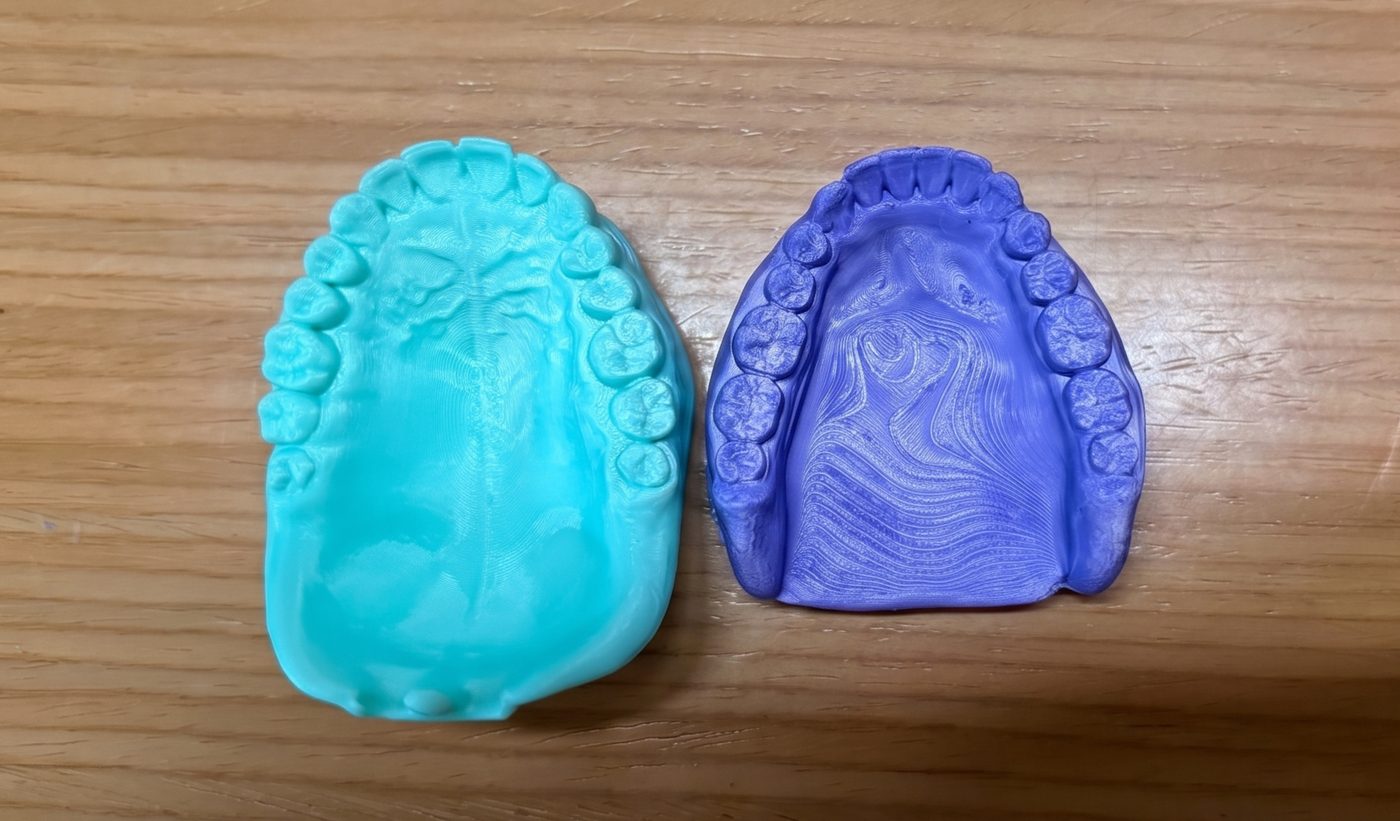
Sculpted palate rugae
The ridges of the palate were hand-sculpted in detail so a child can feel their way across the roof of the mouth and locate exactly where they are.
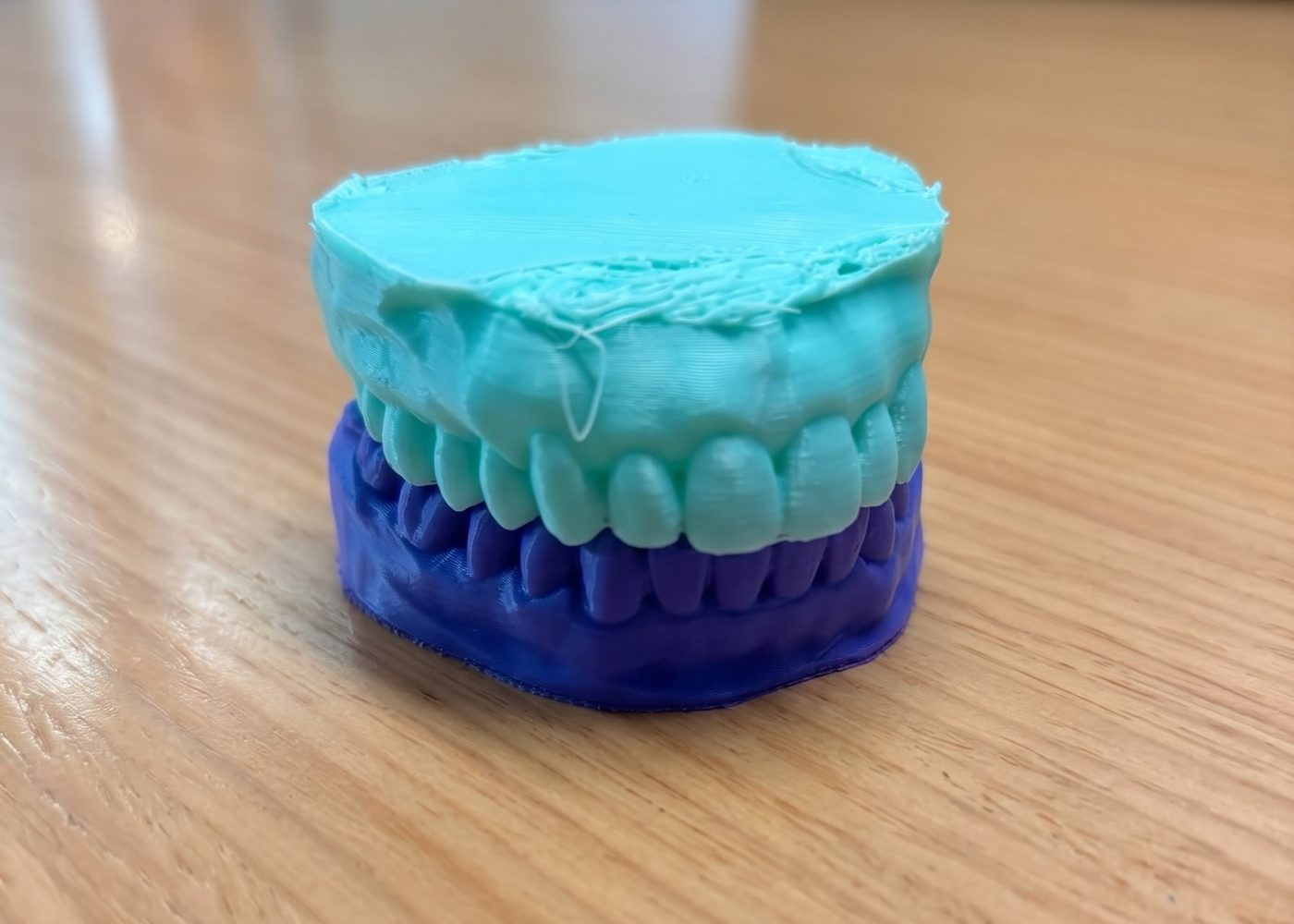
Foldable, hinged design
A hinge system built into the back of the model lets it open and close naturally, the way a real jaw would, without a separate stand or fixture.
Tool-free assembly
Rather than a multi-part kit, the upper and lower halves connect with a simple lego-style snap attachment - no screws, no tools, no adult assembly required.
Design & segmentation
From CT mesh to sculpted anatomy
The raw segmented mesh from the CT dataset formed the anatomical foundation. From there, surface detail - especially the palate rugae - was sculpted by hand to make every landmark distinguishable by touch.
Final render
The full model, open and closed
Colour, translucency, and surface finish were pushed to be as close to real oral tissue as possible - the model needed to hold up to close, repeated handling.
Tactile detail
Where the accuracy matters most
The hinge, the palate, and the teeth are the three points a child relies on most to orient themselves - so each one got extra sculpting and finishing passes.
Physical prototype
3D-printed and hinge-tested
The upper and lower arches were printed separately, in contrasting resin so the fit and hinge alignment could be checked before final assembly and finishing.
Built so a child who has never seen or heard a description of their own mouth can still learn, with confidence, exactly what's there.
Interested in a similar project?
Whether it's a surgical implant or an accessible teaching model, every case starts with the same question: what does this need to be true to, and for whom?
Send a message